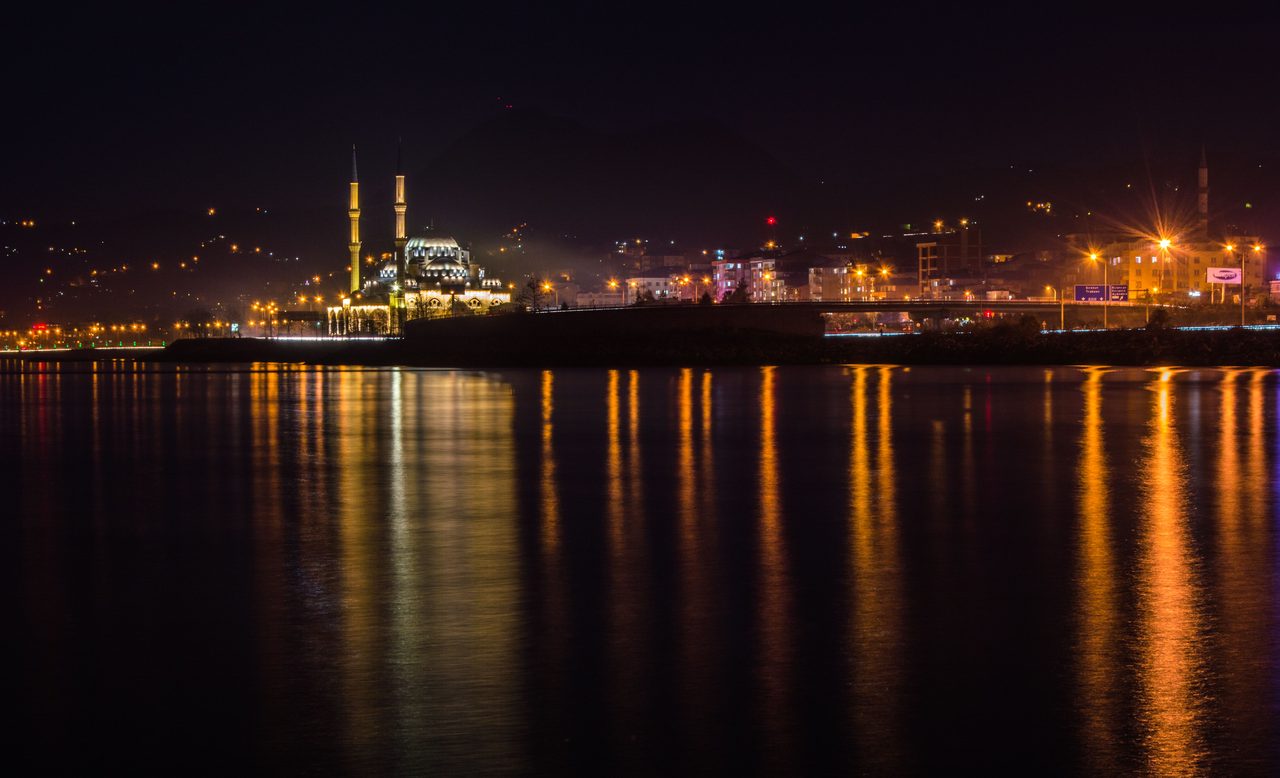
Giresun is a Black Sea coastal city in northeastern Turkey, famous as the legendary homeland of the Amazons and the origin of the hazelnut known to the world as 'giresun fındığı'. Perched on a hillside above the sea, the city blends Byzantine and Ottoman history with lush green mountains and a thriving hazelnut-farming culture. The ancient Giresun Island — the only island on the entire Turkish Black Sea coast — lies just offshore and shelters the ruins of a Byzantine monastery.
Giresun sits on Turkey's eastern Black Sea coast between Trabzon and Ordu, built up a steep hillside where the Batlama River meets the sea. The city's Byzantine castle crowns a rocky promontory and offers sweeping views of the coastline. Inland, forested mountains rise sharply and host the beautiful Kümbet Plateau — a summer highland pasture famous for its yayla culture. The Giresun cherry (the Latin word for cherry, cerasum, derives from Kerasos, the ancient Greek name for Giresun) and the local hazelnut are the twin agricultural identities of the region. Tourism remains low-key and authentic, making Giresun one of the Black Sea coast's most rewarding under-the-radar destinations.
The 21 destinations our editors recommend — from iconic landmarks to under-the-radar finds.
Giresun Island (Aretias/Giresun Adası)
This is the only island in Turkey's share of the Black Sea, and it carries a heavy weight of Greek mythology: ancient writers linked it to the Amazons and to a temple of Ares, and it appears in the Argonautica as a stop on Jason's voyage. Today it is uninhabited apart from ruins and greenery, reached by a short boat ride from Giresun's harbor. The appeal is less about built sights than standing on a scrap of land that shows up in the oldest Black Sea legends.
Giresun Castle (Giresun Kalesi)
Perched on the hill directly above the old town, this fortress marks the original defensive point around which Giresun grew, with walls dating back through Byzantine and earlier occupation of the site. Little of the interior structure survives intact, but the walls and terrace remain, and the hill itself is the highest accessible point in the city center. Visitors come mainly for the position rather than for museum-grade ruins.
Giresun Museum
The museum is housed in a former Greek Orthodox church building in the old town, which is itself part of what's on display: the structure's stone architecture and layout reflect Giresun's pre-1923 Greek Orthodox community before the population exchange. Inside, the collection covers regional archaeology and ethnography, including artifacts recovered from the province's ancient and Ottoman-era sites. It's a small, walkable museum rather than a major regional institution.
Kümbet Plateau (Kümbet Yaylası)
Kümbet is one of the high yaylas (summer pasture plateaus) in Giresun's mountainous Dereli district, sitting well above the humid coastal city in cooler, greener terrain used historically for grazing and still dotted with wooden yayla houses. In summer it draws people escaping the Black Sea coast's heat and humidity for hiking, picnicking, and the region's plateau festival culture. It's a working highland landscape rather than a manicured park, so the experience is open meadows, forest edges, and mist rolling in and out.
Zeytinlik Picnic Area
Zeytinlik is a coastal neighborhood area in Giresun set up with picnic tables and green space along the shoreline, giving city residents and visitors a free spot to sit by the water without leaving town. It's a local, everyday-use space rather than a landscaped tourist park, popular for weekend family gatherings and grilling. The draw is simple: shade, sea air, and a low-key alternative to the busier central waterfront.
Batlama Valley (Batlama Vadisi)
Batlama is a wooded valley cut by the Batlama stream just inland from central Giresun, offering a quick escape into greenery and running water without a long drive. The valley is known locally for trout restaurants built along the creek, where fish are often kept in trout ponds beside the dining tables, plus picnic spots shaded by the surrounding forest. It's a half-day nature stop rather than a major hiking destination.
Recommended itineraries
Pick a length, follow the route. Each itinerary balances headline sights with breathing room.
5-Day Giresun Explorer
Day 1Arrive in Giresun, explore city center
Day 2Visit top attractions and museums
Day 3Day trip to nearby highlights
Day 4Local markets and hidden gems
Day 5Final sightseeing, departure
7-Day Classic Giresun
Days 1-2Giresun city highlights
Days 3-4Regional exploration
Days 5-6Cultural immersion and local experiences
Day 7Return and departure
14-Day Ultimate Giresun
Days 1-3Giresun comprehensive city tour
Days 4-6Northern region exploration
Days 7-9Eastern highlights
Days 10-12Southern attractions
Days 13-14Return to Giresun, departure
Where to stay in Giresun
Three tiers, every traveller covered — from cost-conscious to flagship hotels.
Budget 850–1,550 TRY (~$25.50–46.50 USD)
Hostels, budget hotels, and guesthouses offer affordable stays without sacrificing experience.
Mid-range 1,950–3,500 TRY (~$59–105 USD)
Boutique hotels and well-located accommodations provide comfort and convenience at reasonable prices.
Luxury 4,300–9,100 TRY (~$130–273 USD)
World-class resorts and premium hotels deliver unforgettable experiences.
Giresun Anadolu Hotel
City center · 1,200–2,200 TRY (~$36–66 USD) per night
Giresun is served by Ordu-Giresun Airport (OGU) 22 km west of the city. Long-distance buses connect Giresun to Trabzon, Ankara, and Istanbul. Local dolmuş (shared minibuses) are the primary intra-city transport. The coastal D010 highway links all Black Sea towns.
Budget breakdown
Daily spend by tier in TRY (Turkish Lira); 1 USD ≈ 38 TRY (June 2026; rates fluctuate — verify at xe.com before travel), broken out by category.
Category
Budget
Mid-range
Luxury
Accommodation
550–900 TRY (~$16.50–27 USD)
1,200–2,000 TRY (~$36–60 USD)
2,500–5,000 TRY (~$75–150 USD)
Food (per day)
200–400 TRY (~$6–12 USD)
500–900 TRY (~$15–27 USD)
1,000–2,000 TRY (~$30–60 USD)
Transportation
50–100 TRY (~$1.50–3 USD)
100–200 TRY (~$3–6 USD)
300–600 TRY (~$9–18 USD)
Activities
50–150 TRY (~$1.50–4.50 USD)
150–400 TRY (~$4.50–12 USD)
500–1,500 TRY (~$15–45 USD)
Daily total
850–1,550 TRY (~$25.50–46.50 USD)
1,950–3,500 TRY (~$59–105 USD)
4,300–9,100 TRY (~$130–273 USD)
Best time to visit Giresun
Weather through the year in Turkey
Best timeShoulderWorth avoiding
Average daytime temperature in °C. Figures are for Turkey.
The Black Sea coast receives rain year-round; summer offers the best weather but July–August brings domestic tourism crowds. Spring (May–June) provides lush green landscapes and mild temperatures without peak crowds.
Essential travel tips
The Giresun Island boat trip runs from the harbor — buy tickets at the pier for ~100–150 TRY (~$3–4.50 USD)
Hazelnut products (çikolata, lokum, spreads) make excellent gifts — buy from local producers
Turkish is the only widely spoken language; a translation app is very helpful
Most shops close on Sunday in smaller towns around Giresun
Cash is preferred at local restaurants and markets; ATMs (Ziraat, Garanti) are plentiful on the main street
Hidden gems
Off-the-beaten-path corners most travellers miss.
Safety information
INFO
Keep copies of your passport and travel documents separately from originals
INFO
The Black Sea road (D010) has steep cliffs and rain-slicked curves — drive carefully
INFO
Sea conditions around Giresun Island can be rough; check weather before boat trips
INFO
Emergency: Police 155, Ambulance 112, Fire 110, Coast Guard 158
Frequently asked questions
Is Giresun safe to visit in 2026?
Giresun is one of Turkey's safer provincial cities, with very low rates of violent crime and petty theft. It is a conservative, family-oriented Black Sea town where tourists are treated with warmth and curiosity. The primary safety concerns are road conditions on mountain routes and occasional rough
What is the best time to visit Giresun?
The best time to visit Giresun is June–September. Giresun has a humid subtropical climate (Köppen Cfa) with significant rainfall throughout the year — one of the wettest regions of Turkey. Summers (June–September) are warm and moist, with highs reach
Do I need a visa to visit Giresun?
Citizens of many countries including the USA, UK, EU, Canada, and Australia require an e-Visa obtained at evisa.gov.tr before arrival. Cost is approximately $50 USD. Some nationalities receive visa-free entry for up to 90 days. Verify current requirements at evisa.gov.tr before travel. Requirements vary by nationality, so check with your nearest embassy or the official immigration website before traveling.
What currency is used in Giresun?
The currency in Giresun is the Turkish Lira (TRY). ATMs are widely available in cities and tourist areas. Credit cards are accepted at most hotels and restaurants, but carry cash for markets and smaller establishments.
What language is spoken in Giresun?
The main language(s) spoken in Giresun: Turkish. In tourist areas, English is generally understood. Learning a few basic phrases in the local language is appreciated by locals.
What are the top attractions in Giresun?
The top attractions in Giresun include Giresun Island (Aretias/Giresun Adası), Giresun Castle (Giresun Kalesi), Giresun Museum, Kümbet Plateau (Kümbet Yaylası), and Zeytinlik Picnic Area. Each offers a unique experience, from historic landmarks to natural wonders.