World · 21 Places · Best April–May and September–October
Mardin
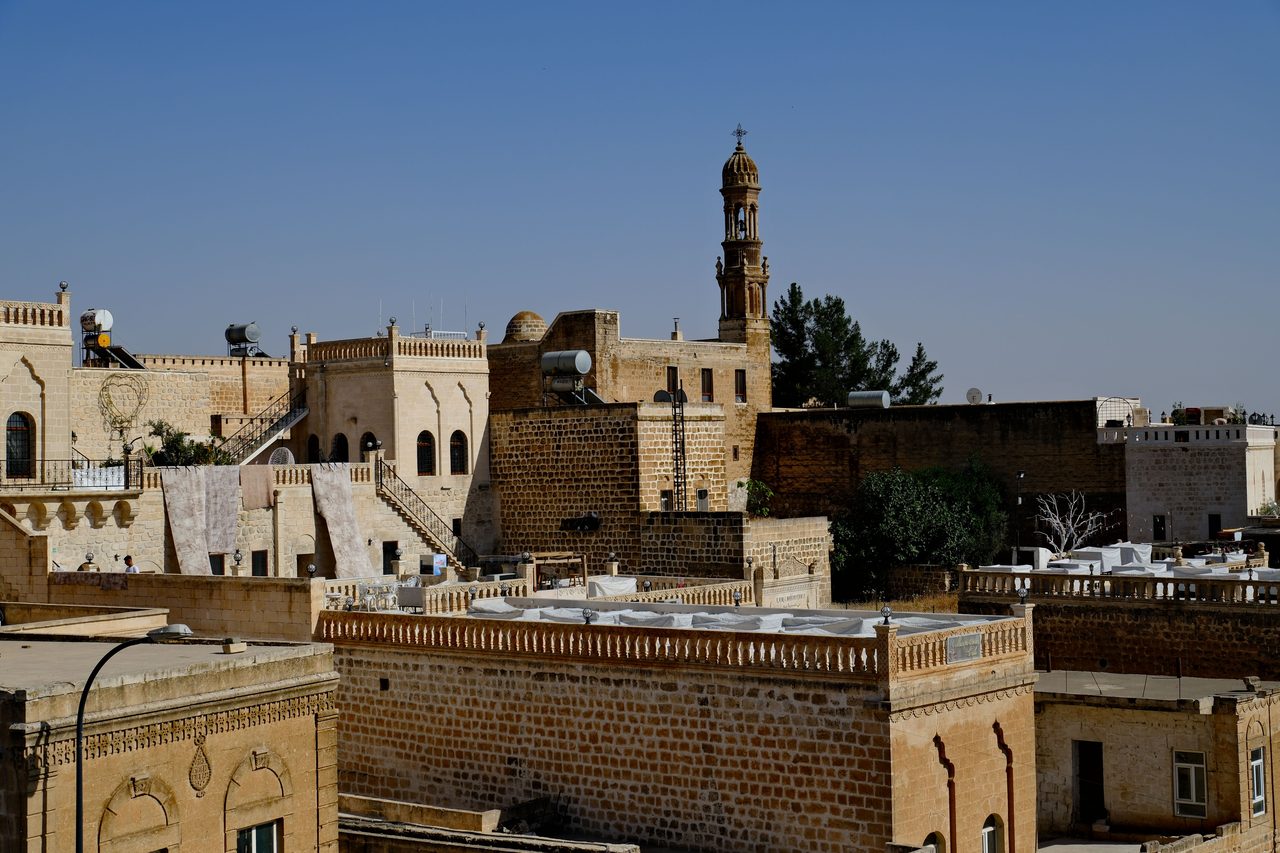
Mardin is a breathtaking hilltop city in southeastern Turkey, perched at 1,000–1,300 metres above the Mesopotamian plain. Its old city of honey-coloured limestone houses, ancient churches, mosques, and monasteries reflects centuries of coexistence among Syriac Christians, Kurds, Arabs, and Turks. Narrow bazaar lanes, ornate Artuqid-era stonework, and sweeping views over the Syrian border plain make Mardin one of Turkey's most distinctive and rewarding destinations.
Mardin old city (Eski Mardin) cascades down a rocky escarpment above the flat plain of Upper Mesopotamia. The city's architecture is defined by intricately carved yellow limestone facades, flat-roofed houses, and ancient religious monuments that reflect over 3,000 years of continuous habitation. Key sites include Deyrulzafaran Monastery (Saffron Monastery), the Kasım Padişah Mosque, Zinciriye Medresesi, and the grand Mardin Museum. The surrounding plateau hosts ancient villages, Syriac monasteries, and archaeological mounds. Mardin is also the gateway to Tur Abdin — the historic heartland of Syriac Christianity.
The 21 destinations our editors recommend — from iconic landmarks to under-the-radar finds.
Deyrulzafaran Monastery (Saffron Monastery)
Founded in the 5th century on the site of an earlier sun-temple, this monastery has been a seat of the Syriac Orthodox Church for centuries and was the residence of the Patriarch until the mid-20th century. It sits a few kilometres east of Mardin on a hillside, built from the same honey-coloured limestone as the old city, with a working chapel, monks' cells and a crypt cut into the rock. A resident monk or caretaker usually leads a short tour through the courtyard, church and underground chambers.
Mardin Old City (Eski Mardin)
The old city is a single long ridge of stacked stone houses, mosques, churches and medreses running below the citadel, overlooking the Mesopotamian plain toward Syria. Its honey-coloured limestone architecture, with carved lintels and vaulted passageways, developed over centuries as Arab, Syriac Christian, Kurdish and Ottoman communities lived side by side. Walking the old city means following Birinci Cadde and the narrow stepped lanes that drop off it, past workshops, courtyard houses and viewpoints over the plain.
Mardin Museum
Housed in a former Syriac Catholic church-turned-mansion building near Cumhuriyet Meydanı, the museum covers the region's layered history from prehistoric finds through Assyrian, Urartian, Roman and Ottoman periods. Its collection includes pottery, seals, coins and religious artefacts drawn from sites across the Mardin province, including material connected to nearby Dara. The building itself, with its stone facade and courtyard, is worth as much attention as the exhibits.
Zinciriye Medresesi (Sultan İsa Medresesi)
Built in the late 14th century under the Artuqid dynasty, this theological school is one of the finest examples of Artuqid stonework in Mardin, with an elaborately carved portal and a symmetrical courtyard plan. It functioned as a teaching institution and still holds tombs of its founders within the complex. The building's terrace is one of the highest publicly accessible points in the old city, looking straight out over the plain.
Kasım Padişah Mosque (Ulu Cami)
Also known as the Ulu Cami, this is Mardin's grand mosque, built in the 12th century under the Artuqids with later Ottoman-era additions and repairs. Its ribbed conical minaret is a landmark visible across the old city skyline, distinct from the region's more common cylindrical minarets. The interior retains a plain, functional prayer hall focused on worship rather than heavy ornamentation.
Mor Gabriel Monastery
Founded in 397 AD near Midyat, Mor Gabriel is one of the oldest surviving Syriac Orthodox monasteries in the world and remains an active religious community with resident monks and nuns. Its complex includes ancient mosaics, a domed church and monastic buildings that have been rebuilt and repaired across many centuries of continuous use. It sits apart from Mardin proper, in the Tur Abdin plateau region known historically as a centre of Syriac Christianity.
Recommended itineraries
Pick a length, follow the route. Each itinerary balances headline sights with breathing room.
5-Day Mardin Explorer
Day 1Arrive in Mardin, explore city center
Day 2Visit top attractions and museums
Day 3Day trip to nearby highlights
Day 4Local markets and hidden gems
Day 5Final sightseeing, departure
7-Day Classic Mardin
Days 1-2Mardin city highlights
Days 3-4Regional exploration
Days 5-6Cultural immersion and local experiences
Day 7Return and departure
14-Day Ultimate Mardin
Days 1-3Mardin comprehensive city tour
Days 4-6Northern region exploration
Days 7-9Eastern highlights
Days 10-12Southern attractions
Days 13-14Return to Mardin, departure
Where to stay in Mardin
Three tiers, every traveller covered — from cost-conscious to flagship hotels.
Budget 500–1150 TRY/day (~$15–$35)
Hostels, budget hotels, and guesthouses offer affordable stays without sacrificing experience.
Mid-range 1500–3400 TRY/day (~$45–$100)
Boutique hotels and well-located accommodations provide comfort and convenience at reasonable prices.
Luxury 4800–13500 TRY/day (~$144–$405)
World-class resorts and premium hotels deliver unforgettable experiences.
Erdoba Elegance Hotel Mardin
Old City, Mardin · 2500–5000 TRY/night (~$75–$150)
Cafés, neighbourhood gems, and tasting menus worth the table reservation.
Cercis Murat Konağı
Mardin-Kurdish · 250–500 TRY/person (~$7.50–$15)
This restaurant occupies a restored 19th-century Mardin stone mansion on Birinci Cadde, with the honey-coloured limestone facade and vaulted interior typical of the old town's houses. The kitchen serves Mardin-Kurdish home cooking rather than a shortened tourist menu, built around slow-cooked lamb and stuffed dumplings. Seating spans several small vaulted rooms and an upper terrace looking over the plain toward the Syrian border.
Devr-i Alem Restaurant
Mardin-Turkish · 150–300 TRY/person (~$4.50–$9)
Set in another converted stone house on Birinci Cadde in the Şehidiye quarter, this restaurant focuses on Mardin-Turkish dishes served family-style rather than as individual plated courses. Kuymak, the stretchy cheese-and-cornmeal fondue, is cooked to order and brought bubbling in its own pan. The dining rooms keep the low stone arches of the original house rather than being modernised.
Mardin is reached by air (Mardin Airport MQM), intercity bus (otogar on the D380 highway below the old city), or private car via the E90/D400 highway. Within the city, minibuses (dolmuş) run along the main ridge road; taxis are plentiful. Walking is the primary mode in the old city.
Budget breakdown
Daily spend by tier in TRY (Turkish Lira), broken out by category.
Category
Budget
Mid-range
Luxury
Accommodation
300–600 TRY/night (~$9–$18)
800–2000 TRY/night (~$24–$60)
3000–8000 TRY/night (~$90–$240)
Food (per day)
150–300 TRY/day (~$4.50–$9)
400–700 TRY/day (~$12–$21)
800–2000 TRY/day (~$24–$60)
Transportation
50–100 TRY/day (~$1.50–$3)
150–300 TRY/day (~$4.50–$9)
500–1500 TRY/day (~$15–$45)
Activities
0–150 TRY/day (~$0–$4.50)
150–400 TRY/day (~$4.50–$12)
500–2000 TRY/day (~$15–$60)
Daily total
500–1150 TRY/day (~$15–$35)
1500–3400 TRY/day (~$45–$100)
4800–13500 TRY/day (~$144–$405)
Best time to visit Mardin
Weather through the year in Turkey
Best timeShoulderWorth avoiding
Average daytime temperature in °C. Figures are for Turkey.
Spring brings wildflowers on the plateau; autumn offers comfortable temperatures and lower crowds. Summer is extremely hot but accommodation prices drop. Winter (December–February) can be cold with occasional snow.
Essential travel tips
The old city is built on a steep hillside — wear comfortable, non-slip shoes
Visit Deyrulzafaran Monastery on a weekday morning to avoid tour groups; admission 50 TRY (~$1.50)
Monastery visits require modest dress — women should cover hair; both sexes cover shoulders
The bazaar (çarşı) area closes for Friday prayers around 12:00–14:00
Mardin's rooftop restaurants offer spectacular sunset views over the plain
Haggling is acceptable in the bazaar but not in regular shops
Carry cash in TRY — many small restaurants and shops do not accept cards
The altitude means evenings can be cool even in summer — bring a layer
Hidden gems
Off-the-beaten-path corners most travellers miss.
Safety information
INFO
Keep copies of passport and Turkish visa/e-visa stamp
INFO
Register with your embassy if staying more than a few days
INFO
Avoid travelling to areas within 10 km of the Syrian border without checking current guidance
INFO
Dress modestly when visiting mosques and monasteries
INFO
Keep emergency cash in Turkish lira — not all businesses accept cards
Frequently asked questions
Is Mardin safe to visit in 2026?
Mardin old city is a popular tourist destination with a good track record for visitor safety, though the province is under elevated travel advisories due to proximity to the Syrian border (approximately 20 km). The main practical risks in the city are petty theft in bazaars and occasional political
What is the best time to visit Mardin?
The best time to visit Mardin is April–May and September–October. Mardin has a semi-arid continental climate with hot, dry summers and cool, occasionally snowy winters. Its elevation (1,000–1,300 m) moderates summer temperatures slightly compared to the plain below.
What currency is used in Mardin?
The currency in Mardin is the Turkish Lira (TRY). ATMs are widely available in cities and tourist areas. Credit cards are accepted at most hotels and restaurants, but carry cash for markets and smaller establishments.
What language is spoken in Mardin?
The main language(s) spoken in Mardin: Turkish, Kurdish, Arabic. In tourist areas, English is generally understood. Learning a few basic phrases in the local language is appreciated by locals.
What are the top attractions in Mardin?
The top attractions in Mardin include Deyrulzafaran Monastery (Saffron Monastery), Mardin Old City (Eski Mardin), Mardin Museum, Zinciriye Medresesi (Sultan İsa Medresesi), and Kasım Padişah Mosque (Ulu Cami). Each offers a unique experience, from historic landmarks to natural wonders.