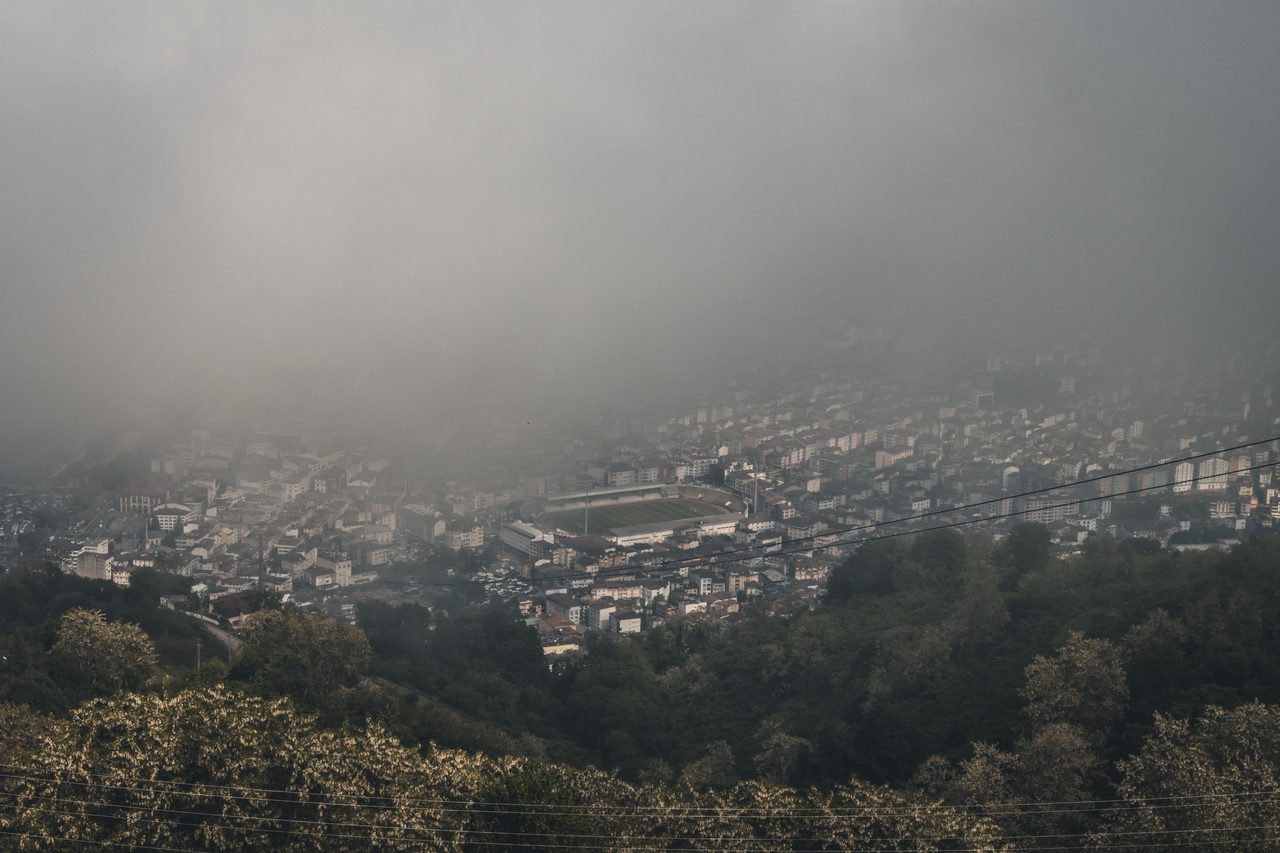
Ordu is a Black Sea city on Turkey's northern coast, famed as the hazelnut capital of the world and celebrated for its lush green hills, ancient history, and stunning coastal scenery.
Perched between forested mountains and the Black Sea, Ordu is a welcoming city of 235,000 in northeastern Turkey. Its ancient Greek roots as Cotyora — described by Xenophon in 400 BC — give way to Ottoman mansions, a buzzing waterfront promenade, and the iconic Boztepe gondola lift offering panoramic views. The surrounding province produces roughly 25% of the world's hazelnut supply, making fındık a cultural and culinary touchstone. Visitors discover Black Sea seafood culture, highland meadows (yaylas) rich in wildflowers, Europe's first artificial-island airport, and a warm unhurried pace that distinguishes Ordu from Turkey's busier tourist hubs.
The 22 destinations our editors recommend — from iconic landmarks to under-the-radar finds.
Boztepe Hill & Gondola (Teleferik)
Boztepe is the wooded hill rising directly behind Ordu's city center, and the cable car climbs from the shore up to its summit in a few minutes rather than the 20-30 minute drive by road. At the top there's a park, tea gardens, and open ground where paragliders launch, with the city, the harbor, and the Black Sea coastline laid out below. It's the standard way locals and visitors alike get above Ordu for a wider view than any street-level spot offers.
Taşbaşı Cultural Center & Neighborhood
This is Ordu's old Ottoman-Greek quarter, a cluster of narrow lanes lined with restored 19th-century timber-framed houses that once belonged to the city's Greek Orthodox merchant community before the population exchange. The buildings have been renovated as galleries, cafes, and event spaces rather than left as a static historic site, so the neighborhood functions as a working cultural quarter today. Walking through gives a sense of what Ordu's commercial center looked like before the modern seafront district took over.
Paşaoğlu Mansion & Ethnography Museum
This restored Ottoman-era mansion in the Taşbaşı quarter now houses Ordu's ethnography collection, with period rooms furnished to show how a well-off local family would have lived, alongside displays of regional costumes, tools, and household objects. It's a small museum rather than an extensive one, but the building itself is as much the exhibit as the collection inside. It gives a concrete sense of domestic life in Ordu before the 20th century in a way the outdoor architecture of the neighborhood alone doesn't.
Kahraman Sağra Hazelnut Museum
Rüsumat No.4 Warship Museum
Ordu Atatürk House Museum
Like similar house museums in many Turkish cities, this preserves a residence associated with Mustafa Kemal Atatürk's visit to Ordu, kept as a period interior with furnishings, photographs, and personal effects from the visit rather than a broader historical exhibition. It's a modest single-building museum aimed at visitors interested in the republic's founding history rather than a major standalone attraction. The rooms are arranged to reflect how the house looked during his stay.
Recommended itineraries
Pick a length, follow the route. Each itinerary balances headline sights with breathing room.
5-Day Ordu Explorer
Day 1Arrive in Ordu, explore city center
Day 2Visit top attractions and museums
Day 3Day trip to nearby highlights
Day 4Local markets and hidden gems
Day 5Final sightseeing, departure
7-Day Classic Ordu
Days 1-2Ordu city highlights
Days 3-4Regional exploration
Days 5-6Cultural immersion and local experiences
Day 7Return and departure
14-Day Ultimate Ordu
Days 1-3Ordu comprehensive city tour
Days 4-6Northern region exploration
Days 7-9Eastern highlights
Days 10-12Southern attractions
Days 13-14Return to Ordu, departure
Where to stay in Ordu
Three tiers, every traveller covered — from cost-conscious to flagship hotels.
Budget 800–1,200 TRY (~$25–38 USD)
Hostels, budget hotels, and guesthouses offer affordable stays without sacrificing experience.
Mid-range 2,000–3,500 TRY (~$63–109 USD)
Boutique hotels and well-located accommodations provide comfort and convenience at reasonable prices.
Luxury 5,000–10,000 TRY (~$156–312 USD)
World-class resorts and premium hotels deliver unforgettable experiences.
Radisson Blu Hotel Ordu
Boztepe area, Altınordu, Ordu · 4,640–6,400 TRY/night (~$145–200 USD)
Ordu is served by Ordu-Giresun Airport (OGU), built on a man-made island in the Black Sea 19 km east of the city. Turkish Airlines, Pegasus, and SunExpress fly direct to Istanbul. Within the city, dolmuş (shared minibuses) and the Boztepe gondola are the primary public options; taxis are plentiful.
Budget breakdown
Daily spend by tier in TRY (Turkish Lira); 1 USD ≈ 32 TRY, broken out by category.
Category
Budget
Mid-range
Luxury
Accommodation
350–900 TRY/night (~$11–28 USD)
2,500–4,000 TRY/night (~$78–125 USD)
4,640–8,000 TRY/night (~$145–250 USD)
Food (per day)
200–400 TRY/day (~$6–12 USD)
500–1,000 TRY/day (~$16–31 USD)
1,000–2,500 TRY/day (~$31–78 USD)
Transportation
50–100 TRY/day (~$2–3 USD)
200–500 TRY/day (~$6–16 USD)
500–1,500 TRY/day (~$16–47 USD)
Activities
100–300 TRY/day (~$3–9 USD)
300–800 TRY/day (~$9–25 USD)
500–2,000 TRY/day (~$16–63 USD)
Daily total
800–1,200 TRY (~$25–38 USD)
2,000–3,500 TRY (~$63–109 USD)
5,000–10,000 TRY (~$156–312 USD)
Best time to visit Ordu
Weather through the year in Turkey
Best timeShoulderWorth avoiding
Average daytime temperature in °C. Figures are for Turkey.
Hazelnut harvest in August–September is culturally special. Autumn foliage at Ulugöl is spectacular in October.
Essential travel tips
Buy an Ordu Kart (transit card) from any dolmuş driver for cheaper bus and minibus fares
Hazelnuts are freshest and cheapest at Gürsoy (Şarkiye Mah., Kazım Karabekir Cad. No:35/A) and Boztepe summit vendors
The Boztepe gondola queues get long on summer weekends — go early morning or after 18:00
The Fresh Produce Bazaar (Stadyum Caddesi near Orta Cami) operates Mondays and Wednesdays only
Very limited English outside hotels; download Google Translate with Turkish offline package
Cash is needed for markets, dolmuş, and small restaurants; cards accepted at hotels and malls
D010 coastal road links Ordu to Samsun (2 hours west) and Trabzon (2.5 hours east)
Hidden gems
Off-the-beaten-path corners most travellers miss.
Cape Jason (Yason Burnu)
An 1868 Greek Orthodox church and 1884 lighthouse on a rocky promontory linked to Argonaut mythology, with excellent birdwatching and sunset views.
Perşembe Yaylası
A remote highland plateau at 1,350–1,500m with green meadows, sheep flocks, a man-made lake, and an annual summer folk festival.
Kahraman Tost
A 60-year-old institution serving the 'Ordu tost' — a grilled sandwich with spiced sausage paste unique to this city, beloved by locals.
Safety information
INFO
Swim only at lifeguarded beaches such as Kumbaşı Beach — Black Sea undercurrents are powerful
INFO
Check weather before boat tours; Black Sea conditions change rapidly
INFO
Drive slowly on narrow yayla mountain curves
INFO
Carry rain gear at all times — even summer afternoons can bring sudden showers
INFO
Keep valuables secure in crowded bazaar areas
Frequently asked questions
Is Ordu safe to visit in 2026?
Ordu is a quiet, predominantly conservative city with low crime rates. Visitors should exercise normal urban caution — watch belongings in crowded markets and on the promenade. The main safety considerations are traffic on the winding Black Sea coastal highway and narrow highland roads. The city is
What is the best time to visit Ordu?
The best time to visit Ordu is May–June. Ordu's climate is shaped by its position on the Black Sea coast backed by mountains that trap moisture from the sea. Annual rainfall exceeds 1,100 mm distributed throughout the year, with winter and a
What currency is used in Ordu?
The currency in Ordu is the Turkish Lira (TRY). ATMs are widely available in cities and tourist areas. Credit cards are accepted at most hotels and restaurants, but carry cash for markets and smaller establishments.
What language is spoken in Ordu?
The main language(s) spoken in Ordu: Turkish. In tourist areas, English is generally understood. Learning a few basic phrases in the local language is appreciated by locals.
What are the top attractions in Ordu?
The top attractions in Ordu include Boztepe Hill & Gondola (Teleferik), Taşbaşı Cultural Center & Neighborhood, Paşaoğlu Mansion & Ethnography Museum, Kahraman Sağra Hazelnut Museum, and Rüsumat No.4 Warship Museum. Each offers a unique experience, from historic landmarks to natural wonders.